
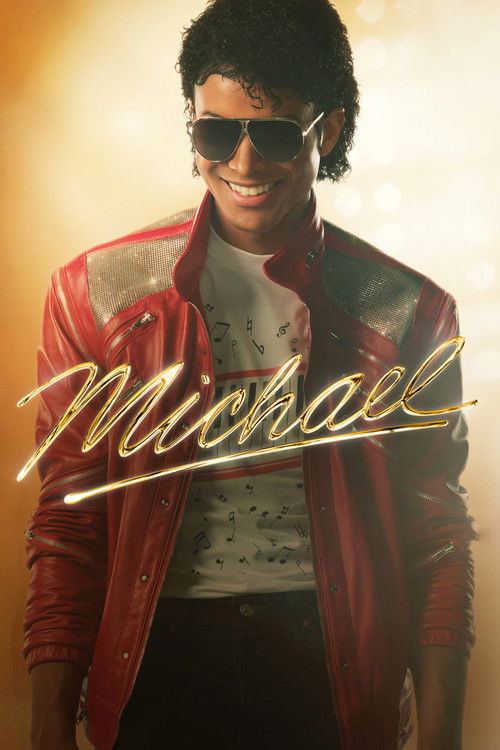
Michael 2026 Review
"highly enjoyable, especially for fans, but it leaves plenty still unsaid"
Michael is one of the most anticipated music biopics in recent memory, and for understandable reasons. Few artists have ever reached the level of fame, influence, or mystique that Michael Jackson did. His life was larger than pop culture itself. His music changed generations, his performances redefined what a live entertainer could be, and his personal life became one of the most discussed stories in modern celebrity history. Trying to turn all of that into a film was always going to be an enormous challenge. In many ways, Michael succeeds. In other ways, it feels like a film too cautious to fully explore the man at its centre.
The biggest strength of the movie, and the reason many people will buy a ticket, is Jaafar Jackson. His performance is genuinely incredible. There are moments where it feels eerie how accurate he is. The voice, the physicality, the tiny mannerisms, the way Michael moved his hands, tilted his head, or delivered a sentence, it is all there. This is not someone vaguely imitating a superstar. It feels like he has completely embodied him. That is a huge achievement because playing someone this iconic can so easily slip into parody. Instead, Jaafar gives a committed, convincing performance that becomes the heart of the entire film.
The story follows Michael from his early years with the Jackson 5 through to the late 1980s, charting the rise from child prodigy to global phenomenon. It covers the demanding and often brutal pressure of his upbringing, the relentless drive of fame, and the making of some of the most legendary music ever released. The film reportedly underwent major restructuring and was split into two parts, which explains why this first chapter ends somewhat abruptly. You can feel that in the final stretch. It stops more than it concludes.
As a fan experience, the film works extremely well. Every time one of the classic songs kicks in, the cinema comes alive. Whether it is the Jackson 5 era, Off the Wall, Thriller, or Bad, the soundtrack is wall to wall iconic music. The recreation of performances, music videos, and visual eras is handled with real care. Watching Jaafar perform moments inspired by Billie Jean, Beat It, Thriller, or the moonwalk era is genuinely exciting. For fans of Michael Jackson, there is a lot of joy in seeing these cultural milestones recreated on a big screen. That joy is where the film shines most. It understands the power of the music and the spectacle of the artist. It knows that Michael Jackson was not just a singer, he was an event. When the film leans into performance mode, it is electric. You are reminded how many all time songs this man had and how many moments he gave pop culture.
Colman Domingo as Joseph Jackson is another standout. Domingo is one of the most charismatic actors working today, so seeing him channel that energy into such a harsh and deeply unlikeable figure is impressive. He brings menace and complexity to the role. You genuinely feel anger toward Joseph, and that means the performance is doing its job. The scenes involving Michael’s relationship with his father are some of the strongest dramatic material in the film because they tap into the emotional wounds that shaped the artist. Where the film becomes more complicated is in its storytelling depth.
For all its polish and energy, Michael often feels like a greatest hits montage with dramatic scenes inserted between songs. Yes, there is a narrative thread. Yes, there are emotional beats. But too often it feels like the movie is racing from one iconic moment to the next rather than fully exploring the person behind them. It shows the songs, the costumes, the videos, the screaming crowds, the father issues, then moves on.
There are so many chapters of Michael Jackson’s life that could have been examined with more nuance. His relationships, his loneliness, the emotional cost of global fame, his identity struggles, and the way the world consumed him as both icon and spectacle. Some of that is touched on, but rarely in a sustained way.
The film also clearly takes a sympathetic stance on controversy. Rather than diving deeply into the allegations and public scrutiny that surrounded him later in life, it largely frames Michael as a childlike, isolated figure who connected with children because he never had a childhood of his own. It presents him as someone who found comfort in innocence and play because fame stole his formative years. Whether audiences accept that framing will depend heavily on the viewer. Some will see it as understandable within the perspective of a biopic shaped by the estate. Others may feel the film avoids difficult truths. What is undeniable is that it chooses celebration over interrogation.
That choice shapes the whole experience. If you are looking for a fearless, complex psychological portrait of Michael Jackson, this is not really that film. If you are looking for an emotionally charged tribute with strong performances and brilliant music, it absolutely is. Visually, the film is impressive. The production design captures each era well, from rehearsal spaces and recording studios to stadium stages and music video worlds. Costumes are excellent, helping chart the evolution from child star uniforms to military jackets and sequined superstardom. Cinematography gives the performances scale, often treating them with the grandeur they deserve. The pacing is mixed. Because it covers so much ground, the film can feel brisk to the point of skimmed over. Significant life moments arrive and disappear quickly. There are times when you want scenes to breathe more, especially the personal ones. Then there are musical sequences that luxuriate in detail. That imbalance reinforces the feeling that the film knows exactly how to celebrate Michael the performer, but is less sure how to unpack Michael the person.
Still, it is hard to deny how entertaining the film is. Even when the narrative feels thin, the sheer force of the music and performance carries it forward. There is a reason Michael Jackson became who he became, and the movie reminds you constantly. Song after song lands. Dance after dance lands. Era after era lands.
For non fans, the experience may vary more. If you are not emotionally connected to the music or legacy, you may see a polished but conventional biopic that glides over complexity. If you are a fan, the film can be a blast. You may forgive structural issues because hearing these songs in a cinema and watching them reimagined is such a good time.
That was my experience. As someone who loves Michael Jackson’s music, I had a great time. I was energised whenever the songs began. I appreciated seeing iconic moments recreated. I admired Jaafar Jackson’s astonishing transformation. But stepping back and judging it purely as a film, I also felt it lacked some of the deeper subplots and emotional excavation it needed to become truly great. In the end, Michael is a strong first chapter that thrives as a celebration and struggles as a complete portrait. It has an incredible lead performance, fantastic music, powerful recreations, and enough dramatic weight to keep you invested. It also feels selective, rushed in places, and more interested in reverence than revelation.
If the second film arrives and is willing to dig deeper, this could become a much richer overall story. As it stands, Michael is highly enjoyable, especially for fans, but it leaves plenty still unsaid. That’s why I rate the film a 7/10
Official Trailer
Film Details


All images and videos are owned by Lionsgate, GK Films, The Michael Jackson Company, and Universal Pictures