
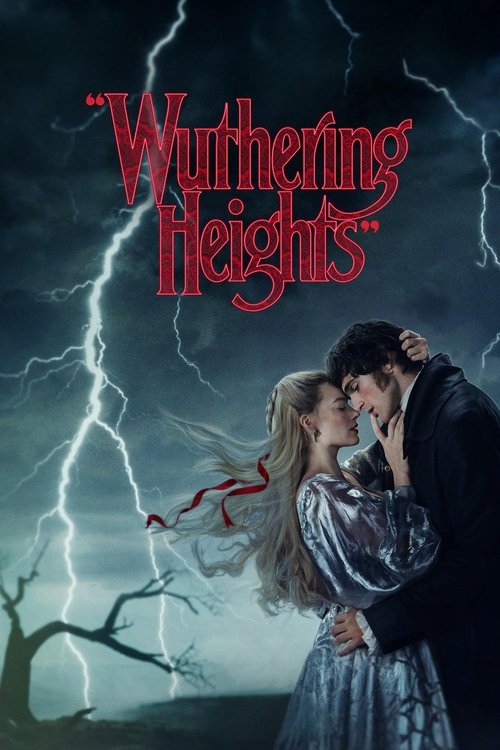
Wurthering Heights 2026 Review
"this version of Wuthering Heights does what it intends to do. It transports you into a stormy, passionate world full of longing and frustration."
Emerald Fennell’s Wuthering Heights arrives on screens as one of the most talked about films of the year. It is a bold reinterpretation of Emily Brontë’s classic 1847 novel, rewriting the familiar love story between Catherine Earnshaw and Heathcliff with a fresh creative vision and a distinctly modern sensibility. The film stars Wuthering Heights Margot Robbie as Catherine Earnshaw and Jacob Elordi as Heathcliff, supported by Hong Chau, Shazad Latif, Alison Oliver, Martin Clunes and Ewan Mitchell. It is a version of Wuthering Heights that leans into intensity and sensuality, often in ways that theatre or previous adaptations have only hinted at, and it will leave audiences with a swirl of emotions long after the credits finish.
Fennell’s vision is unapologetically her own. She does not aim for strict fidelity to the book but instead calls this a personal interpretation, an emotional response to the story rather than a direct translation. That reality is on display from the very beginning. The film’s opening scenes establish the twisted bond between Cathy and Heathcliff not through quiet mood or whispered lines but through powerful visuals, a pulsing tone and a commitment to pushing every emotional element as far as it can go. The result is a film that feels like a dramatic, almost operatic romance told through a hyper‑intense lens.
At its core Wuthering Heights is about two people who are wildly in love, doomed by circumstance and torn apart by pride, passion and class. Robbie’s Catherine is feral, layered and unpredictable. She moves between moments of raw vulnerability and fierce defiance with ease, and Robbie embodies both sides with remarkable control. There are moments where you feel her desperation as deeply as her rage, and her performance is worth the price of admission alone. Elordi’s Heathcliff, meanwhile, is moody and magnetic. He brings a brooding intensity to the role and convincingly captures Heathcliff’s longing without ever losing the mystery that defines the character. The chemistry between the two is electric, and even in stillness their connection feels combustible. Making this feel like a half modern, half medieval telling of Romeo and Juliet.
What sets this adaptation apart from many others is its willingness to embrace sexuality and raw emotion in a way that feels modern and unapologetic. Shots linger. Lines hit harder. There is a clear desire from Fennell to depict love not as a soft light or a trembling whisper but as something primal and visceral. There are sensual sequences and charged moments that might surprise audiences expecting a traditional period romance, but they are consistent with Fennell’s own stylistic history. She has always pushed boundaries, and this film shows that clearly.
The plot follows many of the major beats of the original story, Heathcliff is brought into the Earnshaw household, forms a deep bond with Catherine, and is later rejected by her when she seeks security in marrying Edgar Linton. His return years later as a wealthy and vengeful figure sets off an intense chain of events, including a passionate affair with Catherine that spirals into obsession and self‑destruction. Along the way the film pulls no punches in depicting jealousy, heartbreak and the tragic consequences of love left untempered by restraint.
Visually the film strikes a remarkable balance between Gothic romanticism and heightened stylisation. The cinematography by Linus Sandgren is inventive and often breathtaking. Wide shots of the bleak moorland landscape evoke the original setting’s emotional tone while more intimate close ups cast the characters in a raw, human light. Even scenes that might have felt familiar in a hundred other adaptations feel fresh here because of the way they are framed and lit. The stormy skies, crashing rain and windblown terrain do more than set the mood, they become characters in their own right, mirroring the internal turbulence of Cathy and Heathcliff’s doomed relationship.
While the performances and technical elements are consistently strong, the film is not without its flaws. The narrative sometimes feels uneven or incoherent, as though scenes driven by emotion occasionally come at the expense of clear storytelling. Some sequences feel overly stylised in a way that prioritises shock value or eroticism over narrative clarity. That means the emotional impact can be inconsistent, at times deeply affecting, at other times more caught up in surface spectacle.
There is no denying the sensuality of the film. From the outset, it leans into the physicality of Cathy and Heathcliff’s relationship, pushing it well beyond what many earlier versions have shown. That’s a bold choice and one that will delight some viewers while alienating others. If your expectation of Wuthering Heights is quiet candlelight and whispered poetry, this might not feel like what you imagined. But if you are open to a version that embraces raw desire and emotional intensity, there are rich rewards here. The film leans fully into its mature themes and never shies away from moments that are meant to make you feel deeply and viscerally.
Ultimately Wuthering Heights is one of those films that will divide audiences. For every viewer who finds the adaptation thrilling and emotionally raw, there will be another who sees it as uneven or too stylised. As an interpretation of a beloved classic, it may not satisfy purists, but it does offer something original and bold. It takes risks and it invites reactions, often strong ones. For me, the standout moments come from the central performances by Robbie and Elordi, whose portrayals of Cathy and Heathcliff are magnetic even when the story pushes into over‑the‑top territory.
In the end, this version of Wuthering Heights does what it intends to do. It transports you into a stormy, passionate world full of longing and frustration. It is super raunchy and intensely emotional, and if that is what you enjoy then you will probably find a lot to love here. For someone who naturally does not drift towards this type of film, it still delivered enough compelling moments to make the experience worthwhile. It leaves you with a cocktail of emotions, happiness, sadness, anger, often all within the same scene. That alone makes it memorable, even if it is not perfect and that is why I rate it a 7/10
Official Trailer
Film Details


All images and videos are owned by MRC, LuckyChap Entertainment, Lie Still, and Warner Bros